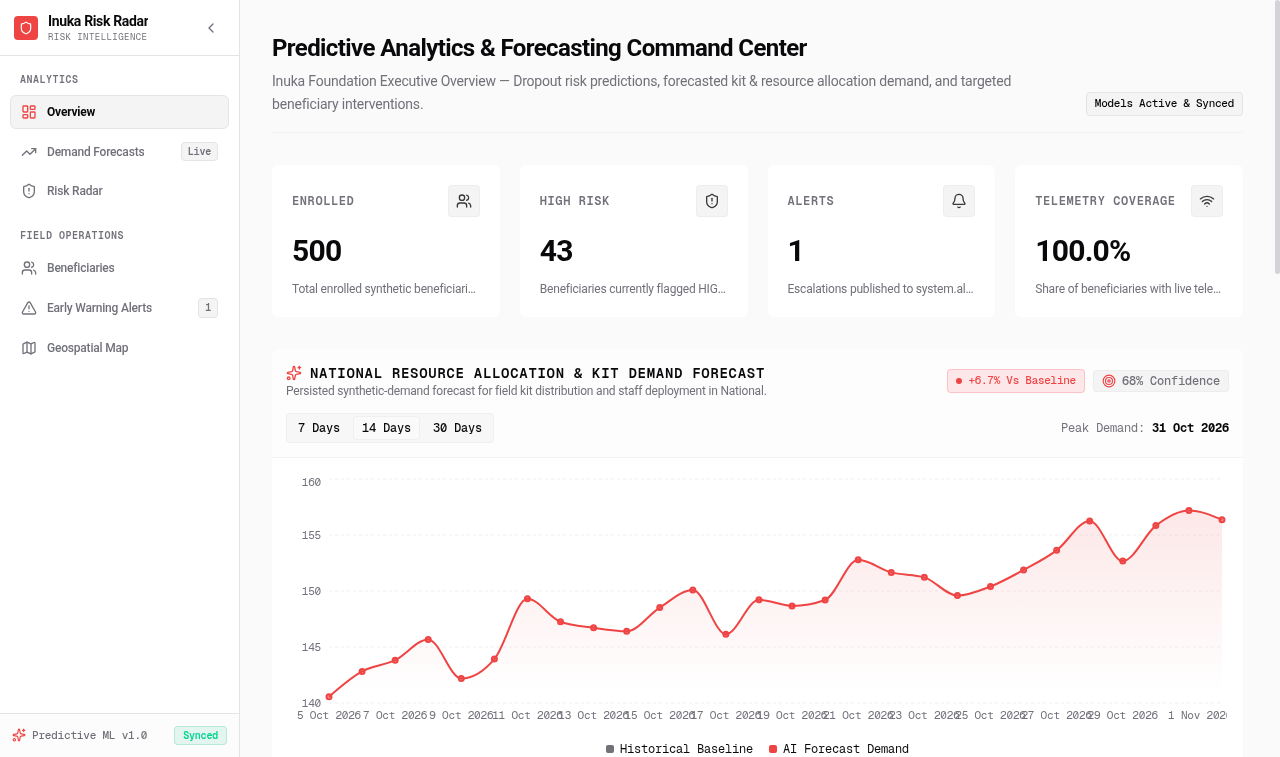
Predictive Intelligence & Program Automation for the Inuka Foundation
Inuka Risk Radar is a real-time risk-scoring and automation platform that identifies program beneficiaries (students/participants) at risk of dropping out, based on field telemetry like attendance, assignment completion, and travel distance. When a beneficiary's risk score crosses a threshold, the system automatically triggers field-worker outreach — all visualized on a live, offline-capable dashboard.
How it works
- Ingestion — Field events stream through Kafka (Redpanda) onto a
beneficiary.telemetrytopic. - Storage — A Kafka consumer lands raw events in PostgreSQL (Bronze), which is joined against demographic/reference data into a deduplicated beneficiary identity graph (Silver), then aggregated into regional stats and forecasts (Gold).
- Intelligence — An XGBoost/Scikit-Learn model scores beneficiaries on request via
POST /api/v1/evaluate, returning a risk tier and the human-readable drivers behind the score. - Automation — Scores above the risk threshold trigger an n8n workflow, which notifies the assigned field worker (SMS via Twilio, or email as a demo-safe fallback).
- Experience — A Next.js dashboard consumes all of this via REST and Server-Sent Events, with an offline-first IndexedDB queue so field data entered without connectivity syncs back once reconnected.
Technologies
- Apache Kafka (Redpanda)
- PostgreSQL
- Scikit-Learn / XGBoost
- FastAPI, SQLAlchemy, Uvicorn
- n8n (self-hosted)
- Next.js (App Router), Tailwind, Shadcn UI, MapLibre GL
- Docker Compose, Caddy, Cloudflare Tunnel
Deployment
The full stack (Kafka, Postgres, FastAPI backend, Next.js frontend, n8n) runs via Docker Compose on Oracle Cloud. Caddy reverse-proxies the frontend and backend behind a single public subdomain, and a Cloudflare Tunnel exposes it without any inbound ports — no public IP or firewall configuration needed.
Data & privacy
All data used — training data, demo data, and anything shown during judging — is synthetically generated. No real personal or beneficiary data is processed or stored.
Where To Find The Resource
- Visit the live project at inukariskradar.umarndungo.com.